TL;DR
- Dots make AI discovery more agentic. A user may no longer need to explicitly search for a product. An agent working toward a larger goal can identify a need and recommend products proactively.
- Product data is becoming part of AEO. OpenAI says feed quality improves discovery relevance, and Shopify product data is already integrated into ChatGPT through Shopify Catalog.
- Plugins are becoming more native to ChatGPT. Software products can increasingly be discovered and used inside ChatGPT itself, not only through a website visit.
- Marketplace and GPT-6.1 reinforce the same direction. OpenAI is building a broader ecosystem around agents, third-party products and cheaper, more capable AI workflows.
OpenAI announced more than 20 updates at DevDay on September 29. Most of them were not directly about search, but together they point to a bigger change in how people will discover brands and products through AI.
The shift is from asking AI for an answer to giving AI a goal and letting it decide what to research, compare and recommend along the way.
For brands, that expands what AI visibility actually means.
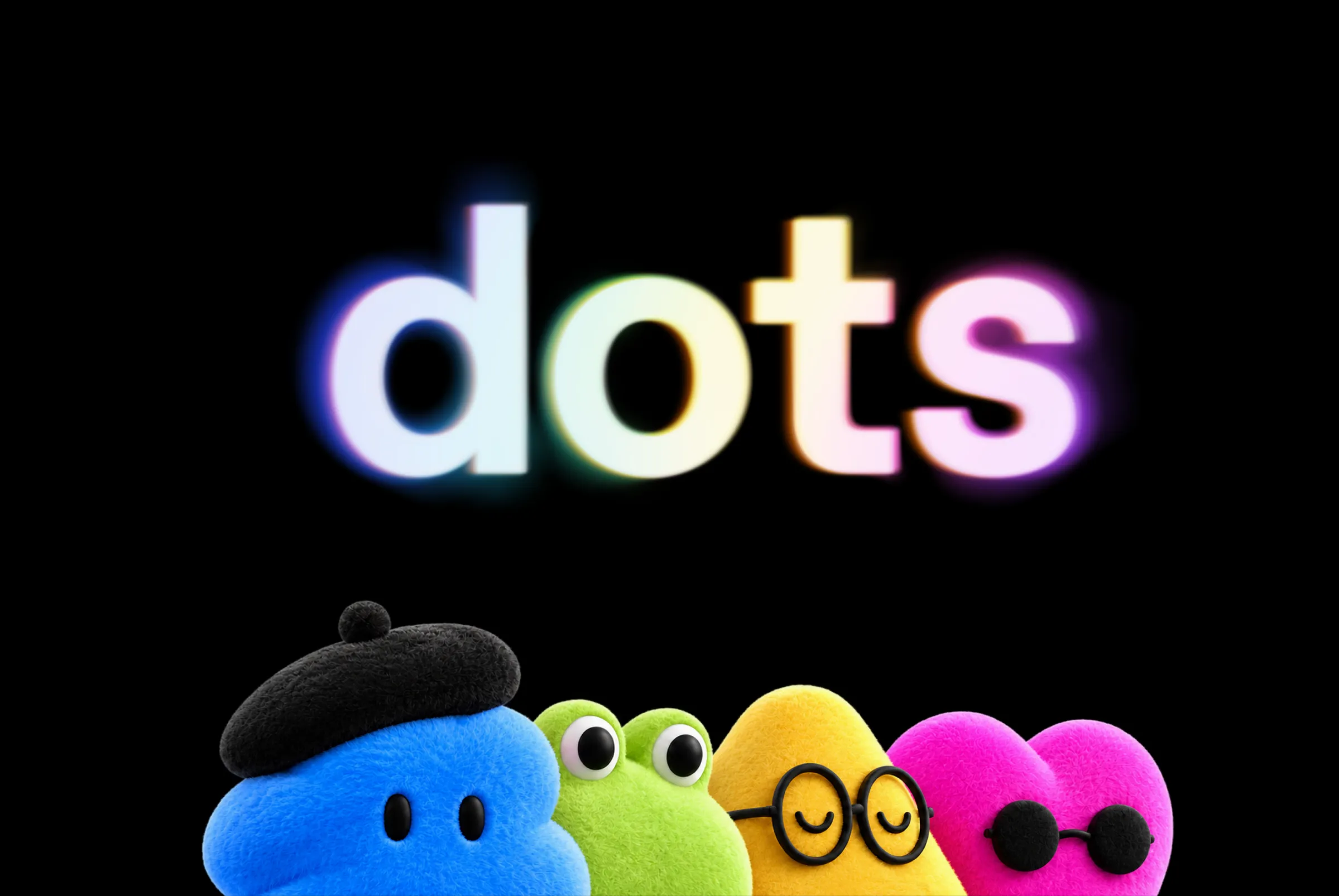
OpenAI introduced Dots, persistent agents that can keep working toward a user’s goals between conversations.
Dots could change how product discovery happens
One of the most important announcements was Dots, OpenAI’s new always-on agents.
Unlike a normal ChatGPT conversation, a Dot can take ongoing responsibility for a goal, remember context, work across connected apps, use its own cloud computer and make progress between conversations. According to OpenAI, Dots can also proactively review connected information and suggest ways to help.
This is similar to the direction Meta recently took with Muse, its personal AI agent. Meta describes Muse as an agent that learns a user’s goals, works in the background, browses the web, connects to apps and proactively suggests actions.
For AEO, this is a meaningful shift.
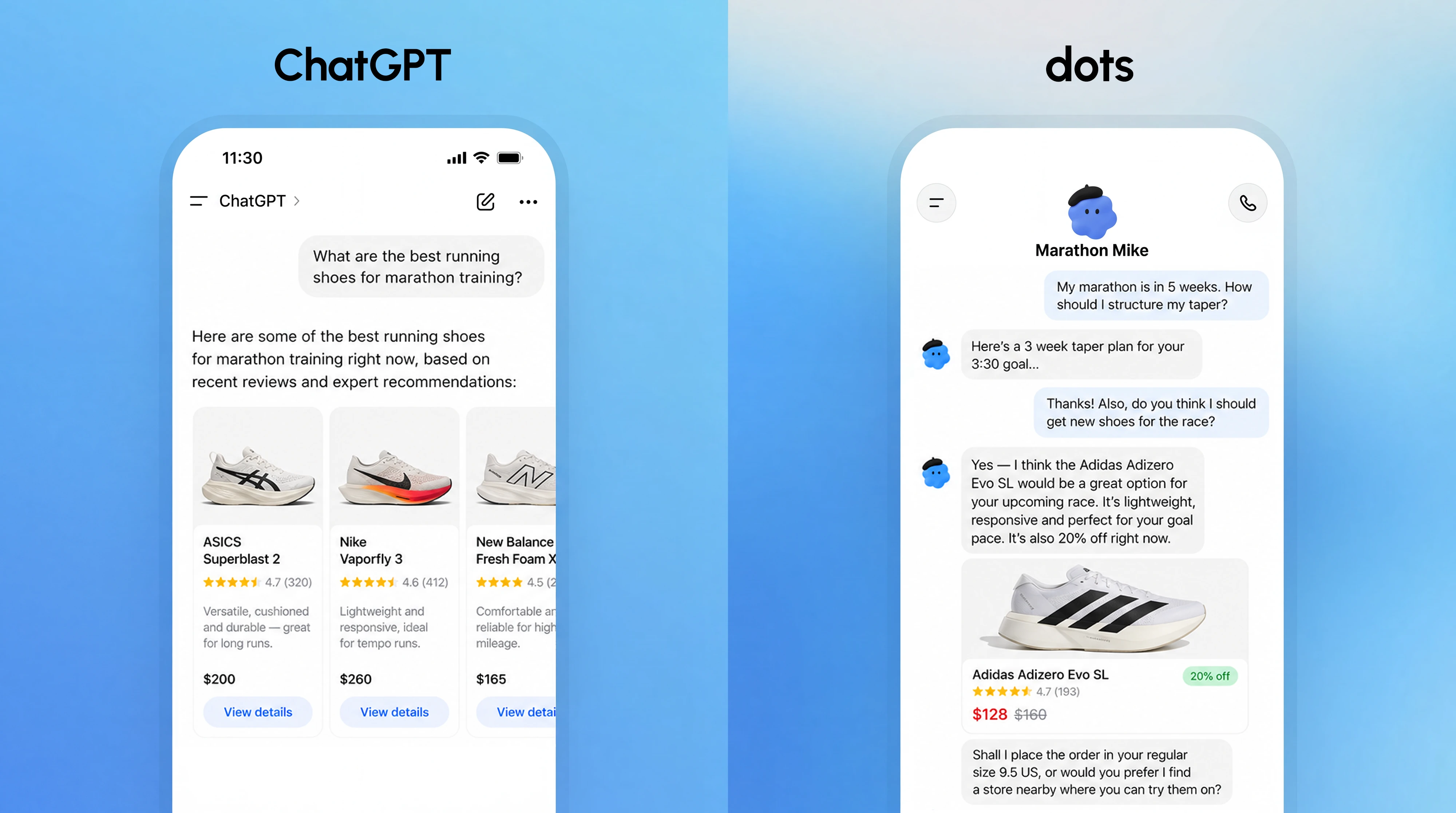
Today, someone might open ChatGPT and ask:
“What are the best running shoes for marathon training?”
That’s a clear search query. The user is actively asking the AI to find and compare products.
With a persistent agent, the interaction could start much earlier:
“Be my personal marathon coach. I want to run a 3:30 marathon. Build my training plan, adjust it based on my progress, recovery and schedule, and tell me what I should change along the way.”
Over the following weeks, that agent could learn how much the person runs, their pace, training load, race goal, shoe preferences, budget and other constraints.
At some point, it may decide that new shoes would help the runner reach that goal. The user never asked “Which shoes should I buy?” The agent identified the need itself, researched the options and recommended the products it believed were the best fit.
That’s a very different discovery journey.
A brand is no longer competing only to appear when someone explicitly asks for its product category. It may need to be understood and selected by an agent working toward a much broader goal.
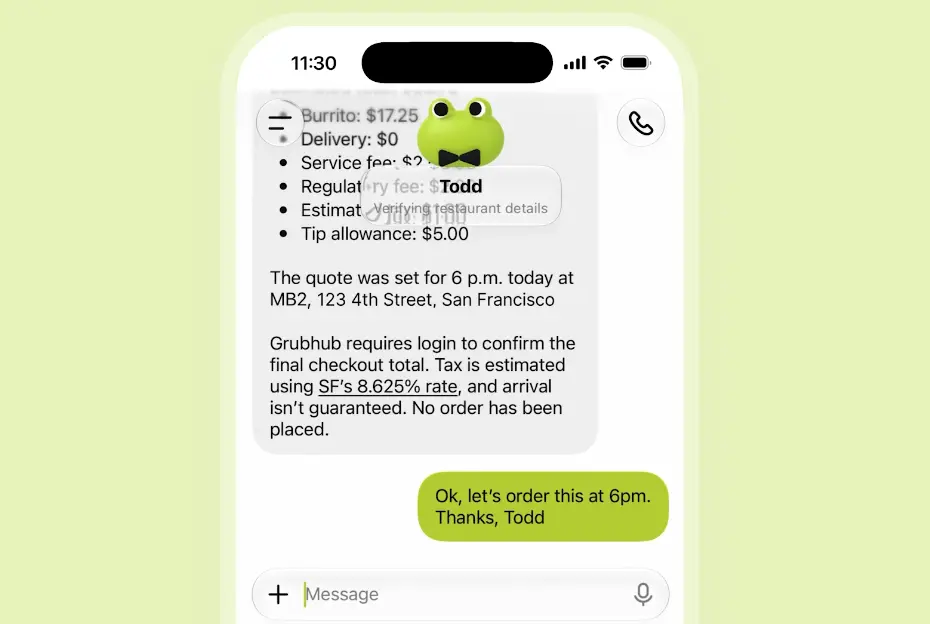
Product data is becoming part of AEO
This was not a new DevDay announcement, but it becomes much more important in an agentic world.
OpenAI now has a documented product-feed infrastructure specifically designed to help ChatGPT understand and surface products.
Its documentation is unusually clear:
“Feed quality improves discovery relevance.”
Product feeds give ChatGPT structured information including titles, descriptions, images, pricing, availability, variants and seller context. OpenAI’s Agentic Commerce guidance also recommends richer information such as product attributes, media and reviews to improve relevance and user trust.
This matters because ecommerce AEO is becoming about more than writing content that an AI crawler can read.
Your catalog itself is becoming an AI discovery asset.
OpenAI says ChatGPT can consider structured first-party and third-party product metadata, public reviews and other content when deciding which products to surface. When multiple merchants sell the same product, factors such as availability, price, quality and whether the seller is the maker or primary seller can also affect merchant selection.
For Shopify brands, this is especially relevant. OpenAI says product data from Shopify merchants is already integrated into ChatGPT through Shopify Catalog, helping products appear more accurately and completely in relevant conversations. Individual Shopify merchants do not need to submit a separate OpenAI feed for that integration.
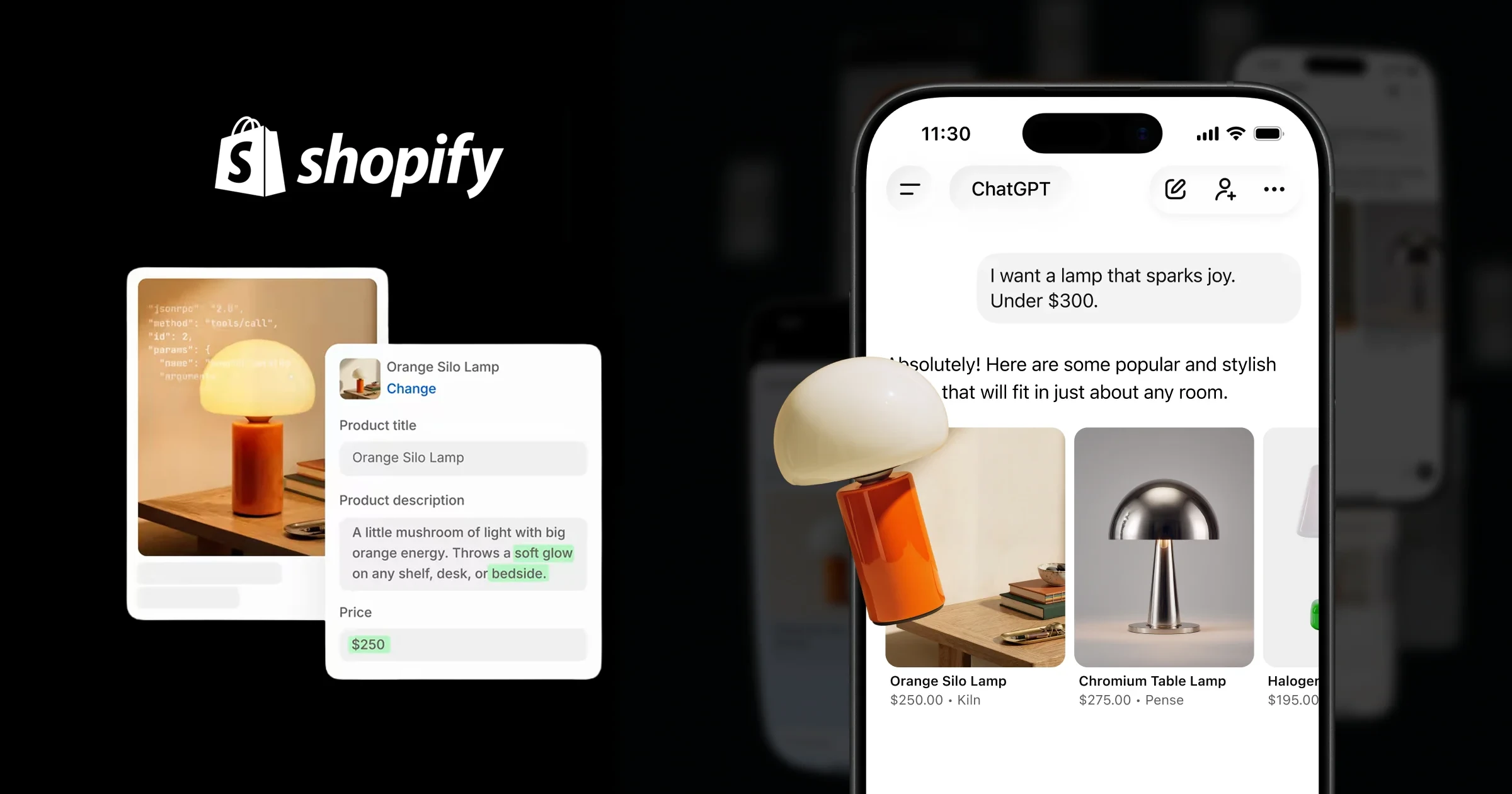
The practical AEO takeaway is straightforward: incomplete, vague or outdated product data gives AI less to work with. Clear descriptions, accurate attributes, current pricing and availability, useful reviews and well-structured product information make it easier for AI systems to understand when a product is relevant.
Plugins make ChatGPT itself a discovery surface
OpenAI also announced Plugin Extensions, which make third-party products feel much more native inside ChatGPT.
According to OpenAI’s Plugin Extensions documentation, plugins can now appear as sidebar apps, conversation panels, file viewers and editors, rich forms and other integrated interfaces.
For software companies, this adds another layer to AI discoverability.
The goal may not always be getting ChatGPT to mention your company and send the user to your website. Increasingly, it could be getting your product surfaced and used inside ChatGPT itself, at the exact moment it becomes relevant to what the user is trying to accomplish.
That is essentially a new discovery surface.
The Marketplace is worth watching, but it isn’t AEO yet
OpenAI also launched the OpenAI Marketplace in beta.
For now, this is primarily an enterprise procurement program. Eligible enterprise customers can apply part of their OpenAI commitment toward qualifying partner software, and purchases are still arranged directly with OpenAI and participating partners.
So this is not another product-ranking channel brands need to optimize for today.
But it supports the broader direction: OpenAI increasingly wants to be a place where users and companies not only use AI, but also discover and access third-party products.
GPT-6.1 makes this easier to scale
OpenAI also introduced GPT-6.1 Sol, which it describes as delivering near-Astra performance at a lower cost for complex work, computer use and professional tasks. OpenAI’s DevDay announcement says its standard token pricing is one-fifth of Astra’s.
That is not an AEO update by itself.
But cheaper, more capable models make it easier to run agents that spend more time researching, comparing information, using tools and completing multi-step tasks.
If agentic behavior becomes cheaper and more common, more discovery decisions are likely to happen inside those workflows.
What this means for AEO
There was no new “ChatGPT ranking algorithm” announced at DevDay.
The bigger change is that the thing we’re optimizing for is expanding.
SEO: Can a search engine find your page?
AEO: Does an AI understand and mention your brand or product?
Agentic discovery: Can an AI understand your product well enough to identify when it is relevant, compare it with alternatives and select it while working toward a user’s goal?
AEO is not going away. It is becoming a larger problem.
Brands still need to be visible in AI answers. But they increasingly also need accurate product data, strong third-party signals and enough context for agents to understand when, why and for whom their products should be recommended.
The next phase of AI discoverability may not start with a customer searching for your product at all.
It may start with an agent deciding they need it.